
How to Avoid Outdoor Storage Mistakes Most Homeowners Make
As outdoor areas are used and enjoyed, it’s natural for everyday items to accumulate, and without the right storage, patios and gardens can begin to feel less organised than they should.
Outdoor storage challenges often arise from everyday routines. Pool toys stay close after a swim, braai tools end up within easy reach, and cushions move in and out as the weather changes. These patterns are signs of an active space – one that simply benefits from storage solutions that keep everything feeling organised and inviting.
Often, the opportunity isn’t about adding more storage, but choosing options that align with how the space is actually used. When storage works with daily habits, outdoor areas stay practical, tidy, and easy to enjoy.
When Outdoor Storage Isn’t Built For The Weather
Outdoor spaces place unique demands on storage, and choosing options designed for year-round exposure makes a noticeable difference over time. When storage isn’t built specifically for outdoor conditions, everyday wear can gradually appear as materials respond to sun, rain, and temperature changes.
These changes often show up in small, manageable ways. Doors may stop closing as smoothly, surfaces can fade after long periods in direct sunlight, or moisture can settle inside after wet weather. Cushions and accessories may even pick up a musty smell if they’re not fully protected. Recognising these signs early makes it easier to adjust and protect your outdoor setup.
When storage performs well, outdoor items stay in better condition, and spaces remain easy to manage. Selecting storage that’s suited to outdoor environments and used as intended helps prevent unnecessary damage, keeping gardens and patios organised, functional, and ready to enjoy.
Weather-Ready Storage
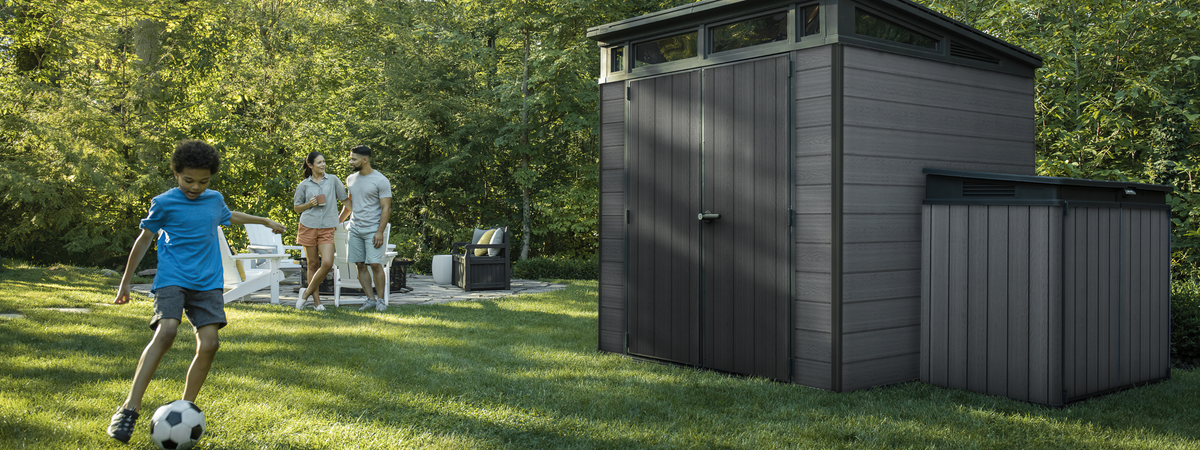
Weather-ready sheds and deck boxes are designed for permanent outdoor use and help prevent damage from moisture and sun exposure. Our weather-ready storage units support year-round protection without constant maintenance.
When the Shed Loses Its Purpose

Sheds are designed to be versatile, yet one of the most common outdoor storage mistakes is allowing everything to collect in one open space without structure. Over time, this makes the shed difficult to navigate and contributes to growing patio clutter.
Well-designed Keter storage sheds provide the structure and durability needed for organised outdoor use, but even the best shed performs better when the inside is thoughtfully arranged.
Create Organised Zones Inside The Shed
A shed works best when organised into clear, functional zones rather than treated as one open storage area. This keeps storage flexible and makes items easier to find and return after use.
Use simple layout ideas to organise the shed effectively:
- Group large equipment together: Store lawnmowers, ladders and bulky garden tools in one area to keep walkways clear and access easy.
- Use shelves for smaller tools and supplies: Keep frequently used items visible, organised and easy to return after use.
- Hang tools vertically: Install hooks or tool hangers to free up floor space and prevent long-handled tools from piling up.
- Create an easy-access section: Place commonly used garden or braai tools near the entrance for quicker use and better storage habits.
Purpose-built outdoor sheds, supported by cupboards and flexible storage from Keter’s outdoor storage range, help separate equipment logically and prevent ongoing garden organisation mistakes.
Why Patio Clutter Persists
Even with storage available, many outdoor areas still suffer from persistent patio clutter. In everyday use, this results in pool toys left on the lawn, braai tools left on prep surfaces, and cleaning supplies left near outdoor taps.
This is one of the most common outdoor storage mistakes: storage is present, but not placed where it’s actually needed.
Position Flexible Storage Close To Everyday Use
Deck boxes and storage benches placed close to activity zones make tidying effortless:
- A deck box near the pool for toys and towels
- A storage bench near seating for cushions and throws
- A cupboard close to the braai for utensils and cleaning supplies
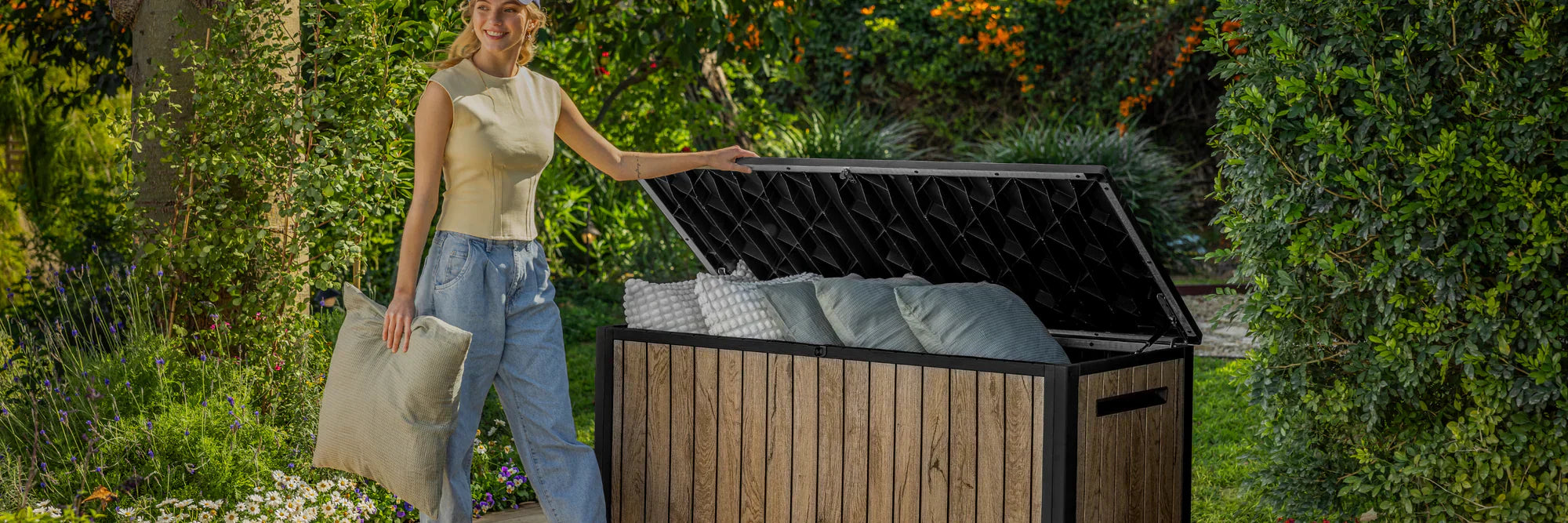
Flexible storage, such as our versatile deck boxes and benches, makes it easier to store frequently used items where life actually happens, reducing recurring patio clutter.
When Outdoor Storage Is The Wrong Size
One common outdoor storage mistake homeowners make is choosing storage that is too small. Around the home, this usually results in cushions stacked on chairs, boxes overflowing and accessories stored randomly.
Outdoor gear tends to accumulate over time. Storage quickly becomes inadequate, leading to constant reshuffling and visible clutter, which, in turn, results in avoidable garden organisation mistakes.
Plan Storage by Category Instead
Plan for categories by allocating storage space to groups of items that are used and stored together:
- Cushions and covers
- Pool toys and accessories
- Seasonal outdoor items
Our Keter deck boxes and benches work particularly well here because they adapt as needs change. Choosing storage with extra capacity and flexible use, such as larger deck boxes for cushions and pool accessories or storage benches that double as seating, allows outdoor areas to evolve without repeating outdoor storage mistakes.
When Vertical Space Is Underused

In compact patios and side yards, even organised spaces can feel crowded if storage remains at ground level. This limits movement, narrows walkways and makes outdoor areas feel smaller and less functional than they need to be.
Floor-level storage reduces walkway space and makes areas feel tighter than they are, contributing to ongoing garden organisation mistakes.
Use Height to Your Advantage
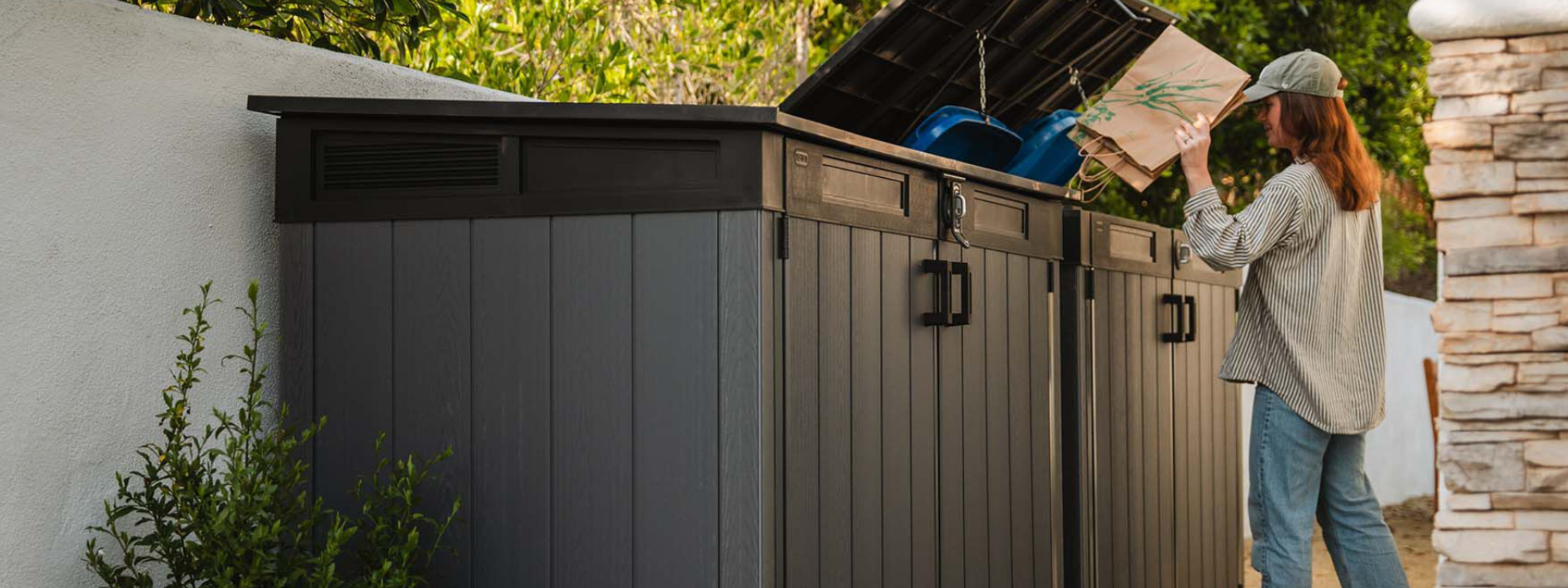
Keter’s vertical outdoor cupboards keep tools, cleaning supplies and accessories organised without expanding the footprint. Our Tall Outdoor Cabinets are designed to maximise vertical space while keeping patios and walkways clear.
How Sheds, Cupboards and Boxes Work Together
A well-organised outdoor space relies on using the right storage for its intended purpose. When each storage type has a clear role, organisation becomes easier to maintain and clutter is far less likely to return:
- Sheds: Bulky, heavy equipment
- Cupboards: Organised tools and supplies
- Deck boxes and benches: Flexible, everyday items
Pairing these pieces creates a system that supports daily life instead of working against it. This is where many outdoor storage mistakes quietly disappear.
Simple Layout and Seasonal Habits That Keep Outdoor Storage Working
Avoiding common outdoor storage mistakes depends on two things: where storage is placed and how it’s maintained over time. In this way, storage supports everyday routines rather than contributing to clutter.
Seasonal Habits That Help Prevent Clutter From Returning
Outdoor storage works best when it’s reviewed occasionally rather than constantly reorganised. Rotating contents instead of moving furniture, storing soft items in a weather-resistant Deck Box and seasonal checks all help prevent clutter from developing.
Together, these habits reduce recurring garden organisation mistakes and keep outdoor spaces functional throughout the year.
Create Outdoor Storage Solutions That Last
It’s evident how many outdoor storage mistakes come from using storage that doesn’t suit its purpose or environment. When storage works with how a space is used, patio clutter becomes easier to control and common garden organisation mistakes are avoided altogether.
You can put this knowledge into practice with Keter’s outdoor storage options, designed to work together and help you manage your outdoor space effectively, season after season.

Leave a comment
This site is protected by hCaptcha and the hCaptcha Privacy Policy and Terms of Service apply.